Self-Managed HOAs: Pros and Cons
If you’re thinking of switching to a self-managed HOA, you may wonder about the pros and cons of your switch. Making a decision like this is no small...



.svg)

Numa AI
Intelligence, Built In.
Built into the workflows your team already uses to reduce manual work, deliver faster answers, and help your team scale confidently.
Learn more about Numa AI
2 min read

The holidays may be over, but for community association management and accounting professionals, this is when the real work begins. The start of a new year marks one of the busiest and most demanding periods in community association management: Year End.
Outside the industry, it's easy to underestimate the challenge. Most businesses close tone set of books, issue W-2s and 1099s, and file taxes once a year. In community association management, those same tasks are multiplied by every community you manage.
If you support 50 associations, you’re closing 51 set of books: your company plus every community in your portfolio. All filings must be completed accurately and on time, and there’s no way to get a head start. The year has to fully close before any of the true work can begin. Year end is intense, but it doesn’t have to feel unmanageable. Below are the key steps to help you move through the busiest season with clarity, confidence, and fewer headaches.
Before you dive in: Download the updated New Year Checklist for Community Management — your step-by-step guide for financial prep, compliance tasks, vendor reviews, communication planning, and more.
Before closing the year, address any lingering items from December or earlier, especially prior-year financial activity.
Be sure to:
Vendor reporting is one of the most time-sensitive year-end
responsibilities.
Key steps include:

Whether payroll is handled in-house or outsourced, ensure everything is updated and accurate before generating employee forms.
Make sure to:
Even if no unemployment benefits were issued, applicable communities must still report.
Early-year compliance is just as critical as financial close for CAM teams and should begin as soon as possible.
Key items to review:
This ensures your communities remain compliant and prepared from day one.
Vendor performance directly impacts resident satisfaction and budget outcomes. The start of the year is the ideal time to evaluate relationships and reset expectations.
Tasks to complete:
Schedule Q1 preventive maintenance for landscaping, HVAC, fire systems, irrigation, and other essential services.
This is where all preparation pays off.
Before closing the books:
When closing the year, make sure to:

If you’re thinking of switching to a self-managed HOA, you may wonder about the pros and cons of your switch. Making a decision like this is no small...

As a member of a community association, you may be aware that your Homeowners Association (HOA) has an Architectural Review Committee (ARC). The ARC...
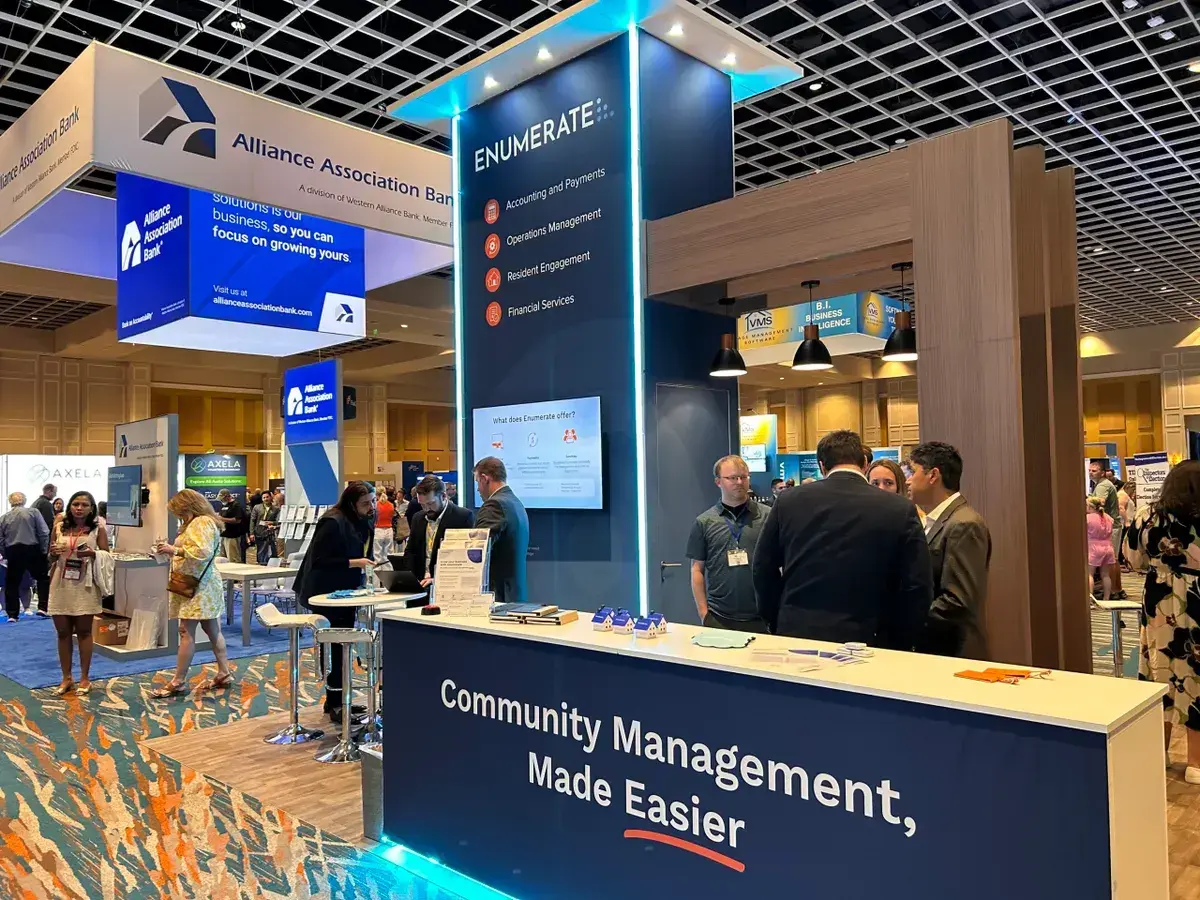
A Booth Built for Community Management Pros From relaxing massages to cutting-edge HOA software, Enumerate brought energy and ease to CAI Annual 2025...